

Rolling Hills
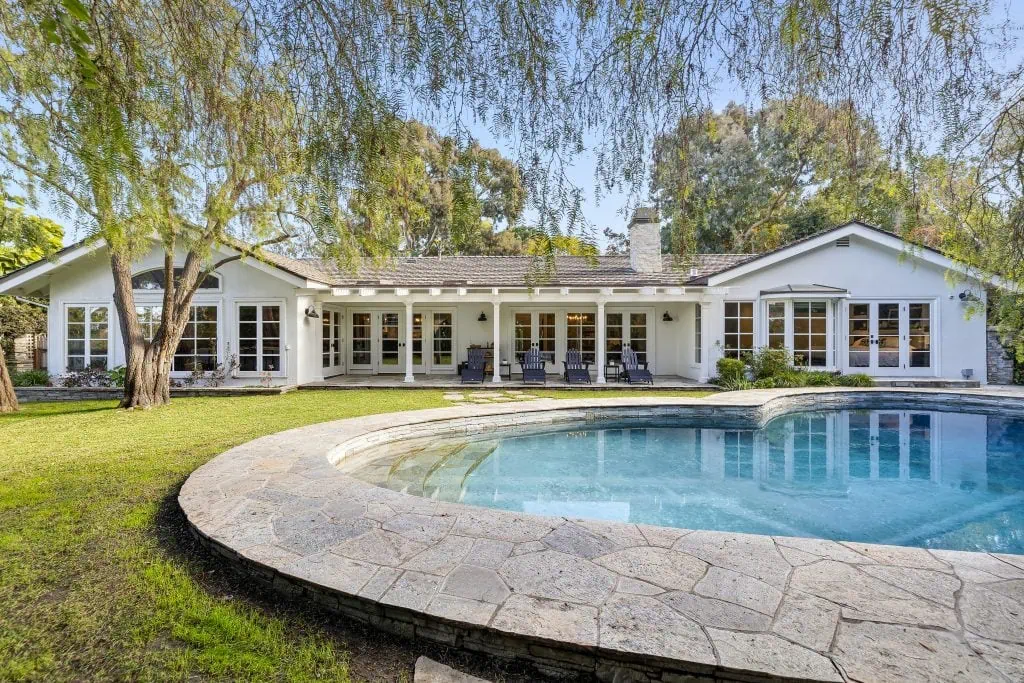
Rolling Hills is one of the few incorporated cities in the United States where the gates are not a feature added to a neighborhood. They are the fundamental premise. The entire 1,920-acre city sits behind three staffed gates, Main, Crest and Eastfield, that control all vehicle access, twenty-four hours a day. There are no commercial buildings anywhere within the city limits. No sidewalks. No streetlights. No traffic signals. The roughly 685 homes within those gates sit on lots with a one-acre minimum and an average of about 2.7 acres, and the city has no intention of changing any of that.
For buyers who want that specific combination, there is no close substitute anywhere in the South Bay.

Loading the National Weather Service forecast for Rolling Hills.
What equestrian facilities does Rolling Hills have?
The equestrian infrastructure is a physical fact of Rolling Hills, not an amenity brochure claim. Miles of private riding trails crisscross the community, maintained by the Rolling Hills Community Association and accessible only to residents and their guests. Barns, corrals, arenas, and hay storage are common features on Rolling Hills properties, not exceptions to a rule. Many lots were designed with horses as a primary consideration, and that heritage runs through the architecture, the lot layouts, and the community culture in ways that remain intact today.
Live MLS listings, updated through the day.
What does the Rolling Hills Community Association review?
The RHCA reviews all construction, landscaping changes, and exterior modifications before work can begin. This is a condition of ownership, not an obstacle for buyers who understand it. The result is a community where the ranch-style architecture holds across generations and the open land ratio never erodes. Buyers who accept the RHCA review process tend to appreciate what that process produces over time.
How does the Rolling Hills market work?
The Rolling Hills market keeps its own schedule. With about 700 homes, turnover is low and few homes are for sale at any one time. When properties sell, the price is for what can’t be replicated: acreage, equestrian access, gated entry, and views that on a clear day reach from the Santa Monica Mountains to Catalina.
Longer marketing times are normal here. In Neil’s experience, buyers in Rolling Hills know what they want, wait for the right property and move quickly when it comes up.
Current market data, Rolling Hills, Residential (CRMLS)
How does Rolling Hills compare with neighboring communities?
Buyers comparing Rolling Hills to adjacent communities typically weigh it against Rolling Hills Estates (no gates, smaller minimum lots, more turnover), Rancho Palos Verdes (no gates, wider price range, more inventory), and occasionally other gated enclaves in the South Bay. The comparison tends to favor Rolling Hills for buyers who prioritize security, land, and horses. Those who prefer more commercial access or a shorter commute to Los Angeles often land in Rolling Hills Estates instead. Both are good choices; they are different choices.
What Rolling Hills does not share with its neighbors: the fully enclosed perimeter, the one-acre floor, the private trail network, and the complete absence of commercial activity within city limits. Those four characteristics in combination define a quality of life that has no exact match on the peninsula.
What schools serve Rolling Hills?
Rolling Hills is served by Palos Verdes Unified School District. Rancho Del Mar High School, the district’s alternative and continuation programs campus, is located within Rolling Hills city limits. The majority of Rolling Hills students attend Peninsula High School for grades 9 through 12.
School attendance boundaries are subject to change and are not guaranteed. You are advised to verify current attendance areas, enrollment eligibility, and all school information directly with the school district for any specific address.
Chhabria Real Estate Company has represented buyers and sellers in Rolling Hills and across the Palos Verdes Peninsula since 1984. A Rolling Hills sale means working through the RHCA approval process, knowing which lot layouts best support equestrian use, reading a small pool of comparable sales, and pricing or bidding when those sales may be months apart.
If you are considering buying or selling in Rolling Hills, the right starting point is a conversation about what you are looking for. Call the Chhabria Real Estate office directly or use the contact form below.
What do homes cost in Rolling Hills?
Over the twelve months from October 2025 through September 2026, 19 single-family detached homes sold in the City of Rolling Hills, at a median of $4,600,000 and an average of $4,940,526, at a median of $1,142 per square foot.
| City of Rolling Hills | October 1, 2025 to September 30, 2026 |
|---|---|
| Median days on market | 76 |
| Share of original asking price | 90.0% |
| Months of inventory | 4.9 |
| Median sale price | $4,600,000 |
| Average sale price | $4,940,526 |
| Median price per square foot | $1,142 |
| Closed sales | 19 |
Average and median measure the same market two ways. The average adds every sale together and divides by the number of sales, so a few high-value homes pull it up. The median is the middle sale, so it stays closer to the typical home. We show both. Why the two numbers differ, and which one to use.
How long does a sale take in Rolling Hills?
Homes in Rolling Hills sold in a median of 76 days, at 90.0 percent of the original asking price, about $100,000 under asking for every $1 million. With 8 sales from July through September and 13 homes for sale on October 11, today’s supply would last nearly five months at that pace. If you’re selling, plan for a longer marketing period than in Lunada Bay, where the median was 23 days. If you’re buying, you’ll typically find room to negotiate from the asking price. Rolling Hills also had the highest median sale price of the cities we report, at $4,600,000.
Source: CRMLS closed sales, single-family detached homes, October 1, 2025 through September 30, 2026, from Chhabria Real Estate Company’s October 11, 2026 pull. Months of inventory uses active listings counted on October 11, 2026. Stats presented here represent the city or area as a whole, not any one individual property. Our next update follows the November 10, 2026 market report.
South Bay life from Rolling Hills
A gated city built around bridle trails, where horse keeping is part of everyday life here, not a destination you drive to.
This content is currently unavailable. Please check back later or contact the site's support team for more information.
Live MLS listings, updated through the day.
Have a question about this? Neil answers personally.