
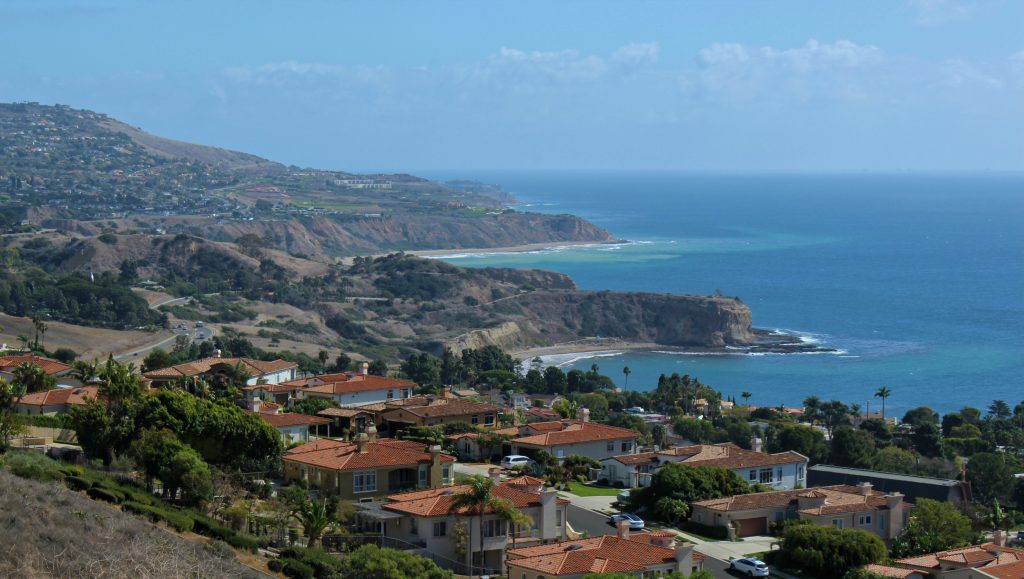
Somewhere in the first month after a move from Palo Alto or Sunnyvale to the coast, a newcomer says “the South Bay” at a dinner table and watches two people nod at two different places. One of them pictures San Jose. The other pictures the Manhattan Beach pier. Both are right, and the confusion is worth a few minutes, because it explains a good deal about how this coast talks about itself, and why locals here tend to lean on the definite article.
What is the South Bay in Los Angeles?
The Los Angeles version is a defined region with a government body behind it. The South Bay Cities Council of Governments, a joint powers authority founded in 1994, describes itself as an agency of sixteen cities and Los Angeles County serving the South Bay subregion. Its members are Carson, El Segundo, Gardena, Hawthorne, Hermosa Beach, Inglewood, Lawndale, Lomita, Manhattan Beach, Palos Verdes Estates, Rancho Palos Verdes, Redondo Beach, Rolling Hills, Rolling Hills Estates and Torrance, along with the Harbor City, San Pedro and Wilmington communities of the City of Los Angeles and the unincorporated County pockets between them. The Council draws the boundary as the Pacific Ocean on the south and west and, generally, the City of Los Angeles on the north and east, sitting between two transportation hubs, Los Angeles International Airport on one side and the Ports of Los Angeles and Long Beach on the other.
The name is geographic and literal. In the Council’s own words, the designation comes from the region’s location at the south end of Santa Monica Bay. Stand on the Esplanade in Redondo Beach or on the bluff at Malaga Cove and look north: the bay curves away toward Malibu, and everything from Playa del Rey down to the Palos Verdes Peninsula forms its lower half. That is the South Bay. The Southern California Association of Governments treats it as one of nine subregions of Los Angeles County, alongside the Westside, the Gateway Cities and the San Gabriel and San Fernando valleys, and Metro runs a South Bay Cities Service Council whose territory adds Harbor Gateway and Westchester to the list.
How old is the name?
Older than most people assume. The institutions carry the dates. In 1955 the residents of Hermosa Beach, Manhattan Beach and Redondo Beach voted to create the South Bay Hospital District, the agency that became the Beach Cities Health District in 1998. California State University, Dominguez Hills was founded in 1960 because, in the university’s words, the need for a campus in the South Bay region of Los Angeles County became apparent with the population growth of the 1950s. The regional newspaper, the Daily Breeze, spent decades with South Bay in its masthead. According to Sam Gnerre, the longtime South Bay history columnist for that paper, the Redondo Breeze changed its name to the Redondo Daily South Bay Breeze on December 18, 1922, a Hermosa Beach Chamber of Commerce advertisement in the Los Angeles Times used the phrase in March 1923, and the paper ran as the South Bay Daily Breeze from 1931 until it became simply the Daily Breeze in 1974. The South Bay Center opened in Redondo Beach in 1958 and became the South Bay Galleria in 1985. Gnerre’s account is a historian’s blog rather than the newspaper itself, so we cite it as his research; the pattern it describes is consistent with every institutional date above. By the time the aerospace plants filled Torrance and El Segundo, the name had been in daily use for thirty years.
What is the South Bay in the Bay Area?
The northern version is looser, and that is the point. The San Francisco Bay Area is conventionally divided into the North Bay, the East Bay, the Peninsula and the South Bay, and the Bay Area Council reports its economic figures in exactly those four buckets. But no agency defines where the South Bay begins. The Metropolitan Transportation Commission uses the term for San Jose and Santa Clara County and the Peninsula for San Mateo County without drawing a line between them, and the Bay Area Council defines only the East Bay explicitly, as Alameda and Contra Costa counties. The Santa Clara Valley Transportation Authority, the agency that actually runs the buses and light rail there, does not use the phrase at all; its stated vision is to innovate the way Silicon Valley moves.
That is because the Bay Area’s South Bay has a more famous name. The City of San José calls itself the heart of Silicon Valley, and the Joint Venture Silicon Valley Institute for Regional Studies defines the valley as all of Santa Clara County, all of San Mateo County, plus Fremont, Newark and Union City in Alameda County and Scotts Valley in Santa Cruz County. The nickname itself first appeared in print on January 11, 1971, in a series titled Silicon Valley USA by Don Hoefler in Electronic News, according to the Computer History Museum, which also notes that nobody is certain who first said it aloud. In other words, the region a Bay Area transplant calls the South Bay is, on paper and in practice, Silicon Valley. The South Bay is what people there call it when they are not talking about work.
Where does Silicon Beach come in?
Silicon Beach is the name that attached to the Los Angeles technology corridor running, in the USC Viterbi School’s description, from Santa Monica to Playa Vista, home to more than 500 technology companies. Google opened its first Los Angeles office in Santa Monica in 2003, a Venice campus in 2011 and, in 2018, took over the Spruce Goose hangar in Playa Vista. Loyola Marymount, whose campus sits inside it, says plainly that it is not clear when the term was first coined and that not everyone has been eager to adopt it. What we can say is that it is a nickname, not a jurisdiction, and that the six communities it covers, Playa Vista, Playa del Rey, Westchester, Mar Vista, Marina del Rey and Culver City, sit at the northern edge of the South Bay Cities boundary rather than inside it. Our Silicon Beach hub covers each of them, including which city or county each one actually answers to.
So a family that moves from Silicon Valley to Silicon Beach has moved from one nickname to another, and from a South Bay with no boundary to a South Bay with a council of governments. The phrase they used at home now points somewhere new, and the somewhere new has been using it since the 1920s.
Why do locals say “the South Bay”?
Partly habit, and partly because the institutions do. The Council of Governments writes “the South Bay subregion.” Dominguez Hills writes “the South Bay area of Los Angeles.” Torrance Transit describes itself as serving “the South Bay region of Los Angeles County.” The definite article signals a specific, bounded place rather than a compass direction, and it is how a resident tells you, without saying so, that they mean the one with a hospital district, a state university and a newspaper named after it. We could find no institutional source that has studied the usage as a phenomenon, so treat this paragraph as observation rather than scholarship. But listen at the next open house and count.
Are people actually moving from one South Bay to the other?
In our own client work, yes: a meaningful share of the buyers we represent in the Beach Cities and on the Peninsula arrive from the Bay Area, often with equity compensation and a clear idea of what a commute should cost them in time. The public data is more mixed than the anecdote, and it is worth saying so. The most recent county-to-county flows the Census Bureau has published cover 2015 to 2019, and in that period the net flow between Santa Clara County and Los Angeles County ran modestly toward Santa Clara, not away from it, according to a summary of those Census tables. The Bureau has not released a county-pair series for the years since, so anyone quoting a post-2020 Bay Area exodus to this coast is quoting something other than the Census. What the data does support is that both counties lost population on net over the five years to 2020, Los Angeles by about 123,000 and Santa Clara by about 32,000. The movement we see is real at the level of individual households; the size of it is not something we will put a number on until the Bureau does.
What this means if you are the newcomer
Three practical things. First, when a listing, a school page or a contractor says South Bay, it means the region above, from El Segundo to San Pedro and up onto the Peninsula, and the Greater South Bay hub and Beach Cities hub explain how its cities differ. Second, the Bay Area habit of treating the South Bay as the affordable end of the region does not transfer. Here, the South Bay contains some of the most expensive coastline in Los Angeles County; over the most recent twelve months on record Manhattan Beach closed at a median of $3,800,000 and $1,643 per square foot (the current figures for seven South Bay cities are on the South Bay Market Insights page), and the Palos Verdes Peninsula is priced by land and view rather than by proximity to an office. Third, the nickname you are moving toward, Silicon Beach, is a corridor of employers, not a place to live in the way Silicon Valley is; most of the people who work there live somewhere else, and a large share of them live in the South Bay. If you are weighing a move between the two, send us the address on either end and we will tell you what the numbers support.
Keep reading


