
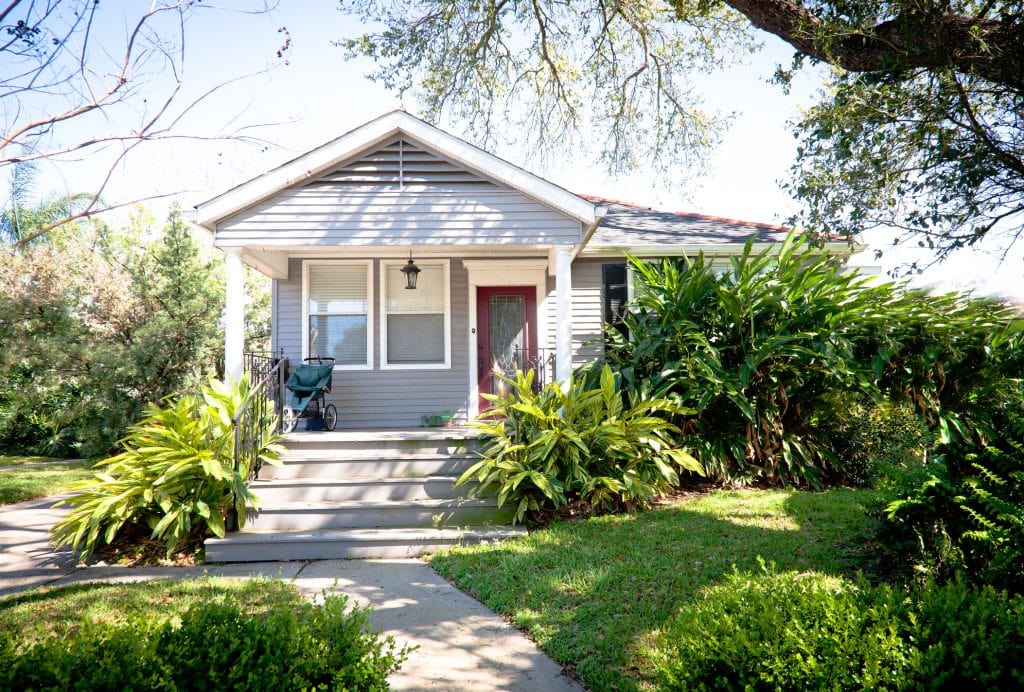
Being named a historic landmark does not lower a Redondo Beach home’s property tax on its own. The tax change comes from a separate Mills Act contract that the owner of a landmarked home can sign with the City of Redondo Beach. Under that contract, the Los Angeles County Assessor values the home on the income it could earn, compares that figure with two others, and enrolls the lowest of the three. As of November 8, 2026, the City says its Mills Act program is open to owners of qualified historic properties that are landmarked, and its landmark table marks 57 properties as having Mills Act agreements. The City is holding a community workshop on landmarks and the Mills Act on Saturday, November 21, 2026, at the Historic Public Library, 309 Esplanade.
Chhabria Real Estate Company has sold thousands of homes on the Palos Verdes Peninsula, the Beach Cities and the Greater South Bay since 1984.
What is a historic landmark in Redondo Beach?
A landmark is a building, site or feature the City has placed on its local historic register under Title 10, Chapter 4 of the Redondo Beach Municipal Code, the Historic Resources Preservation chapter. A resource generally has to be at least 50 years old (section 10-4.302). One that is 30 years old can qualify if it is “very exceptional” or threatened.
In a January 6, 2026 staff report to the City Council, the City’s Community Development Director counted 154 properties on the City’s Historic Register. The City’s online Local Landmarks table lists 134 landmark entries, and its Historic Districts page lists the North Catalina Historic District (designated in 1995), the Gertruda Avenue Historic District (1991) and the Original Townsite Historic District, which is on the National Register of Historic Places. The two counts come from different City sources and overlap, so we report both. For the story behind many of these homes, our Redondo Beach history page goes back to the town’s beginnings.
Who decides, and does the owner have to agree?
Only the owner can start a designation. Section 10-4.301 says nominations “shall be made only by application of the property owner or property owners representing a majority or controlling interest in the property.” A historic district cannot take in a property without the owner’s written consent (section 10-4.303), and an owner can withdraw consent “at any time prior to the close of the public hearing” (section 10-4.307).
The Public Amenities Commission holds the public hearing and approves or disapproves the designation by resolution (section 10-4.308). Anyone can appeal the decision to the City Council by 5:00 p.m. on the tenth day after it (section 10-4.601). Older City pages and one code section still refer to a Preservation Commission; the current code defines the Commission as the Public Amenities Commission.
What changes once a home is a landmark?
Exterior work needs a Certificate of Appropriateness, the City’s approval that a change fits the historic character of the property. Under section 10-4.401, one is required before anyone can “alter, restore, demolish, remove, or relocate any exterior improvement or architectural feature that is either a contributing characteristic of the resource or visible from any public right-of-way,” and it applies “even if no other permits or entitlements are required by the City.” Minor alterations get a lighter review with no public notice, and an approval lapses after 36 months.
Ordinary maintenance that does not change design, material or appearance is exempt (section 10-4.701), and owners have a “duty to keep in good repair” (section 10-4.702). Demolition of a landmark is a discretionary permit reviewed under the California Environmental Quality Act (CEQA, the state’s environmental review law). It goes to the Commission and needs a finding of a hazard, a public use or economic hardship (section 10-4.404).
The chapter also lists tools that can ease work on a landmark: use of the California Historical Building Code (section 10-4.312), historic property variances (section 10-4.313) and adaptive reuse (section 10-4.314).
What is the Mills Act, and how does it change the property tax?
The Mills Act is a California law, Government Code sections 50280 to 50290, that lets a city sign a contract with the owner of a privately owned historic property. The owner agrees to restore and maintain the property to the Secretary of the Interior’s Standards for Rehabilitation and the State Historical Building Code. In return, the County Assessor values the property a different way.
Under Revenue and Taxation Code section 439.2, the assessor “shall not consider sales data on similar property” and values the home “by the capitalization of income method,” meaning on the income it could earn, not on recent sales. The Los Angeles County Assessor compares that value with the current market value and the factored base year value (the Proposition 13 value), and “the lowest of the three values is then enrolled.” The Assessor also notes that “Mills Act properties may undergo increases or decreases in property taxes each year,” and mails values to existing contract holders each May.
The California Office of Historic Preservation says “actual property savings vary around the state,” and that each local government sets its own criteria and decides how many contracts it will allow.
How does a Redondo Beach owner get a Mills Act contract?
Landmark designation comes first. The City’s guide, Mills Act Process for Applicants, sets the order: designation, then a Public Amenities Commission hearing (the Commission “meets the second Wednesday of each month”), then City Attorney review and notarization, then City Council consideration, which is “not a public hearing.” The signed contract is “forwarded to the Los Angeles County Assessor for reassessment,” and contracts “recorded by December 31 are typically reassessed by June 30 of the following year.”
State law requires an inspection of the interior and exterior before a new agreement and every five years after that (Government Code section 50281(b)(2)). The City’s pages, read on November 8, 2026, post no application deadline, fee or cap on the number of contracts.
What does a buyer inherit with a Mills Act home?
The contract stays with the house. Government Code section 50281(b)(3) makes it “binding upon, and inure to the benefit of, all successors in interest of the owner,” and says a new owner “shall have the same rights and obligations under the contract as the original owner.” The restoration and maintenance commitments, the five-year inspections and the Mills Act valuation all pass to the buyer.
Each contract runs at least 10 years, and a year is added automatically at each anniversary (section 50282(a)). To end it, the owner gives notice of nonrenewal at least 90 days before the renewal date (the city must give at least 60 days), and the contract then stays in effect for the rest of its remaining term (section 50282(c)).
If the City finds a breach, it can cancel the contract after a public hearing (sections 50284 and 50285). The cancellation fee is 12.5 percent of the property’s current fair market value, as determined by the county assessor as though the property were free of the contract (section 50286(a)). On a home the assessor values at $2,000,000, that works out to $250,000. The recorded contract and the City’s landmark resolution are public records tied to the parcel.
What is the City doing on historic preservation now?
On January 6, 2026, the City Council took up historic preservation policy as part of its General Plan Land Use Element update (File 26-0005). The staff report from Community Development Director Marc Wiener said “Staff is seeking direction from the City Council,” quoted Policy LU-7.8, “Continue to provide Mills Act Agreements to owners of historic sites,” and noted that the City’s 1986 to 1996 survey list “appears to be in conflict with the requirement for owner consent.”
The City’s legislative record shows no recorded action on the item as of November 8, 2026, and the meeting minutes are still marked draft, so we have not reported an outcome. We will add it when the City publishes one.
When and where is the November 21 workshop?
Celebrating Our Historic Landmarks: Honoring Our Past, Preserving Our Future runs Saturday, November 21, 2026, from 10:00 a.m. to 12:30 p.m. at the Historic Public Library, 309 Esplanade, Redondo Beach. The City lists Redondo Beach history, historic landmark designation, preservation best practices and the benefits of the Mills Act as the topics, with City staff and Public Amenities Commissioners on hand. “Space is limited, and RSVP is required,” through the online form on the City’s announcement. Refreshments will be served. It is also on our This Week in the South Bay calendar for its week.
We do our very best to supply facts drawn from official sources so that the information you find here is reliable and accurate. If we find conflicting information, we report on all of it.
This post is general information about City of Redondo Beach and State of California rules as published on November 8, 2026. It is not real estate, tax, legal, lending, financial or investment advice, and it is not a recommendation to buy, sell, hold, list or price any property. Mills Act results depend on each property, its contract and the County Assessor’s valuation; the City’s Planning Division and a tax professional can apply these rules to a specific home.
Buying, selling, or still deciding if Redondo Beach is where you’ll settle down next?
Sources
- City of Redondo Beach, “Celebrating Our Historic Landmarks: Honoring Our Past, Preserving Our Future”, read November 8, 2026
- City of Redondo Beach, Mills Act, read November 8, 2026
- City of Redondo Beach, Mills Act Process for Applicants (PDF, undated), read November 8, 2026
- City of Redondo Beach, Locally Designated Landmarks, read November 8, 2026
- City of Redondo Beach, Historic Districts, read November 8, 2026
- Redondo Beach Municipal Code, Title 10, Chapter 4, Historic Resources Preservation, read November 8, 2026
- Redondo Beach City Council, January 6, 2026, File 26-0005, and administrative report, read November 8, 2026
- California Government Code sections 50280 to 50290 (the Mills Act), read November 8, 2026
- California Revenue and Taxation Code sections 439 to 439.4, read November 8, 2026
- California Office of Historic Preservation, Mills Act Program, read November 8, 2026
- Los Angeles County Assessor, Mills Act, read November 8, 2026


