
Updated October 18, 2026.
Fourteen statewide propositions go to California voters on November 3, 2026. Five of them reach a South Bay property owner or buyer: a state second loan for buyers of new homes (Proposition 37), $11.25 billion in housing bonds (Proposition 1), a two-thirds vote for voter-proposed local special taxes (Proposition 43), a ban on new state taxes on personal property (Proposition 42), and a faster environmental review path for housing and other projects (Proposition 45). A sixth, Proposition 40, is a one-time tax on billionaires that generally leaves real estate out. Here is what each does, in the Legislative Analyst’s terms, and what it changes for someone who owns or is buying in the Beach Cities, the Palos Verdes Peninsula, Torrance, San Pedro or El Segundo. The local measures, including Palos Verdes Estates, Redondo Beach, Rancho Palos Verdes, Hermosa Beach and El Segundo, are in our local ballot post. No recommendation on any proposition appears on this page.
Proposition 37: a state loan covering up to 17 percent of the price of a new home
Proposition 37 would have the California Housing Finance Agency (CalHFA) offer a fixed-rate loan covering up to 17 percent of a home’s purchase price, funded by up to $25 billion in revenue bonds. The buyer brings at least 3 percent down. Homeowners’ monthly loan payments repay the bonds, and the Legislative Analyst estimates no direct state or local costs.
The Secretary of State’s official summary says buyers must be California residents, must live in the home, and must meet income limits, and that the home must be newly constructed and priced below about $1.5 million. The Legislative Analyst’s analysis adds that the buyer must be the first purchaser of the home and that household income cannot exceed twice the typical income level in the buyer’s area. The analysis says only that the price could not exceed certain limits; the $1.5 million figure is the Secretary of State’s wording.
Two conditions decide whether this reaches a South Bay buyer: the home has to be newly built, and it has to price under the limit. A resale does not qualify at any price, so the measure applies only to new construction that sells under the limit. How many South Bay closings meet both tests is a count from our CRMLS pull, and it goes into the follow-up once we have it.
For a buyer of a new townhome at $1.2 million, 17 percent is $204,000 from the state loan, alongside the 3 percent, or $36,000, the buyer brings. For an owner selling an existing home in the Beach Cities or on the Peninsula, a buyer of that home could not use the program, because resales do not qualify.
Proposition 1: $11.25 billion in housing bonds
Proposition 1 would authorize $11.25 billion in state bonds for housing: a $10 billion general obligation bond repaid by the state’s General Fund, and a $1.25 billion veterans bond repaid by veterans’ home loan payments. The Legislative Analyst’s breakdown of the full amount:
- $7.2 billion for affordable multifamily rental housing
- $1.25 billion for veterans home loans
- $1.1 billion for homeownership programs
- $500 million for infrastructure that supports affordable housing
- $450 million for farmworker housing
- $350 million for University of California and California State University student housing
- $200 million for tribal housing grants
- $200 million for local pilot projects for lower-cost housing
Repaying the $10 billion bond costs the General Fund $500 million to $600 million a year for about 25 years. The veterans bond carries no direct state cost. The two lines that could touch a South Bay buyer are the $1.1 billion for homeownership programs and the $1.25 billion for veterans home loans. Both are statewide programs, not South Bay programs. Read the full analysis from the Legislative Analyst.
Proposition 43: a two-thirds vote for voter-proposed local special taxes
Proposition 43 would require two thirds of voters to approve a new, increased or extended local special tax that voters propose, beginning January 1, 2027. A special tax funds a specific purpose. The rule covers only special taxes proposed by voters, and it takes effect January 1, 2027.
The Legislative Analyst’s analysis does not say how taxes approved before 2027 are treated. Measure PVE in Palos Verdes Estates, on the same ballot, needs two thirds on November 3 under current rules. For a South Bay owner, the proposition matters for parcel taxes and other special taxes that voters place on a future ballot. The Legislative Analyst’s fiscal estimate adds that local tax revenue may be lower in the future than it would otherwise be. Read the analysis.
Proposition 42: personal property, not a house
Proposition 42 would prohibit new state taxes on owning financial assets and other personal property, and limit when a tax can apply retroactively. The measure covers taxes on owning financial assets and other personal property, which means holdings other than real estate. The Legislative Analyst’s analysis does not list any existing tax as changing, and it notes the state could collect less in the future than it otherwise would. Read the analysis.
Proposition 40, a separate measure on the same ballot, would impose a one-time state tax of 5 percent of net worth on California billionaires who were state residents on January 1, 2026, due in 2027 and payable over five years. The Legislative Analyst’s analysis of Proposition 40 generally excludes real estate and most retirement accounts from the tax. Neither analysis mentions the other measure, and how the two would interact if both passed is not addressed in either. Read the Proposition 40 analysis.
Proposition 45: faster environmental review, with housing first on the list
Proposition 45 would create an alternative environmental review and court procedure under the California Environmental Quality Act (CEQA) for projects it defines as essential, which applicants could choose instead of the existing procedures. The Legislative Analyst’s list of eligible projects opens with housing, then water systems, clean energy other than nuclear, health facilities, clinics and medical office buildings, fire, police and sheriff’s stations, wildfire risk reduction, broadband internet access, education facilities, and transportation other than high-speed rail.
One feature is a 365-business-day limit for an agency to finish an environmental impact report. If the agency misses it, the applicant has the option of requesting a hearing or going to court.
The Legislative Analyst estimates near-term state and local costs in the high tens of millions of dollars a year, possibly above $100 million, and says the longer-term effect is uncertain in either direction. Housing and wildfire risk reduction both sit on the eligible list, so for a South Bay owner the measure bears on how quickly new housing clears review and how quickly fuel reduction work in the Palos Verdes hills can be approved. Read the analysis.
What else is on the statewide ballot?
The other statewide propositions cover the state reserve fund, school and health care funding, campaign finance, recall procedure, medical research bonds, voter identification, the state spending limit and community health clinic spending, along with Proposition 40, the one-time tax on billionaires’ net worth that generally excludes real estate. The two Los Angeles County measures cover labor disputes and the county Ethics Commission. The full list is in the Secretary of State’s voter guide.
When and where can a South Bay voter cast a ballot?
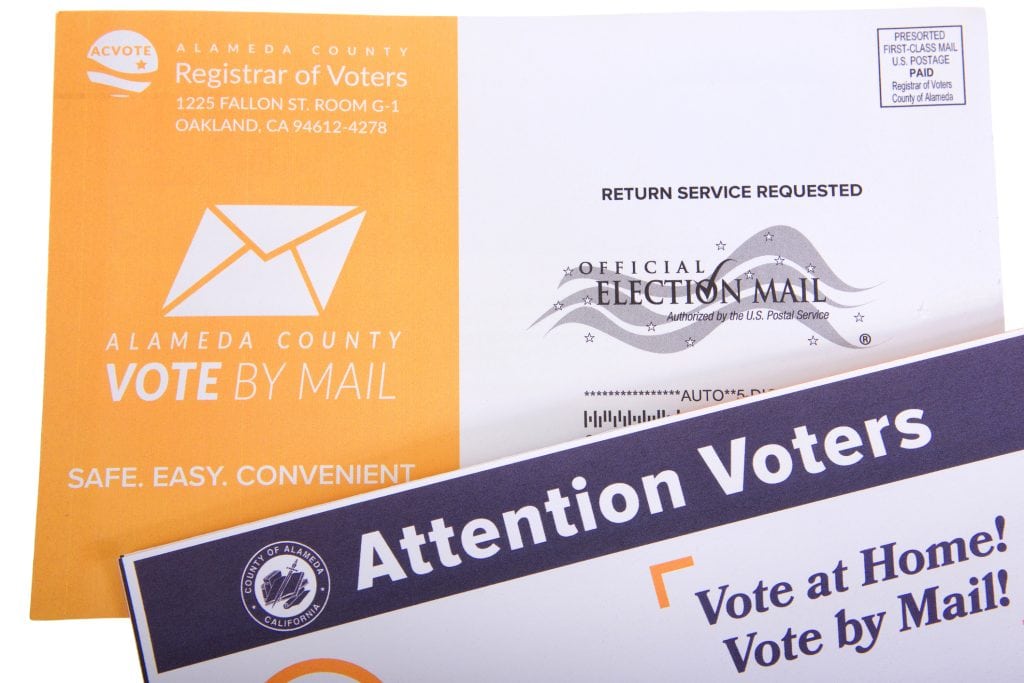
Los Angeles County mailed vote-by-mail ballots to registered voters by October 5. A mailed ballot has to be postmarked by Election Day, November 3, and received within seven days of it, and the last day to request a replacement ballot is Tuesday, October 27, according to the Registrar-Recorder/County Clerk. Vote Centers open for in-person voting on October 24 at some sites and October 31 at most, and every Vote Center is open on Election Day from 7 a.m. to 8 p.m. The Vote Centers nearest each South Bay city, with their opening dates, are listed in the local ballot post.
What will we report next?
Certified results from the Los Angeles County Registrar will go into a follow-up after November 3, once the county certifies the count. Market figures for South Bay markets are in Market Insights.
This page explains what each proposition does. It takes no position on any of them. It is general information, not real estate, tax, lending, financial or investment advice, and not a recommendation to buy, sell, hold, list or price any property. Each proposition’s analysis is linked in the Sources section below.
Buying, selling, or still deciding if the South Bay is where you’ll settle down next? Neil Chhabria, Broker, 310.798.3122, neil@chhabriare.com.
Sources
California Secretary of State, Official Voter Information Guide. Legislative Analyst’s Office, ballot analyses of Propositions 1, 37, 40, 42, 43 and 45. Los Angeles County Registrar-Recorder/County Clerk, vote by mail. All read October 17 and 18, 2026.
We do our very best to supply facts drawn from official sources so that the information you find here is reliable and accurate. If we find conflicting information, we report on all of it.


